
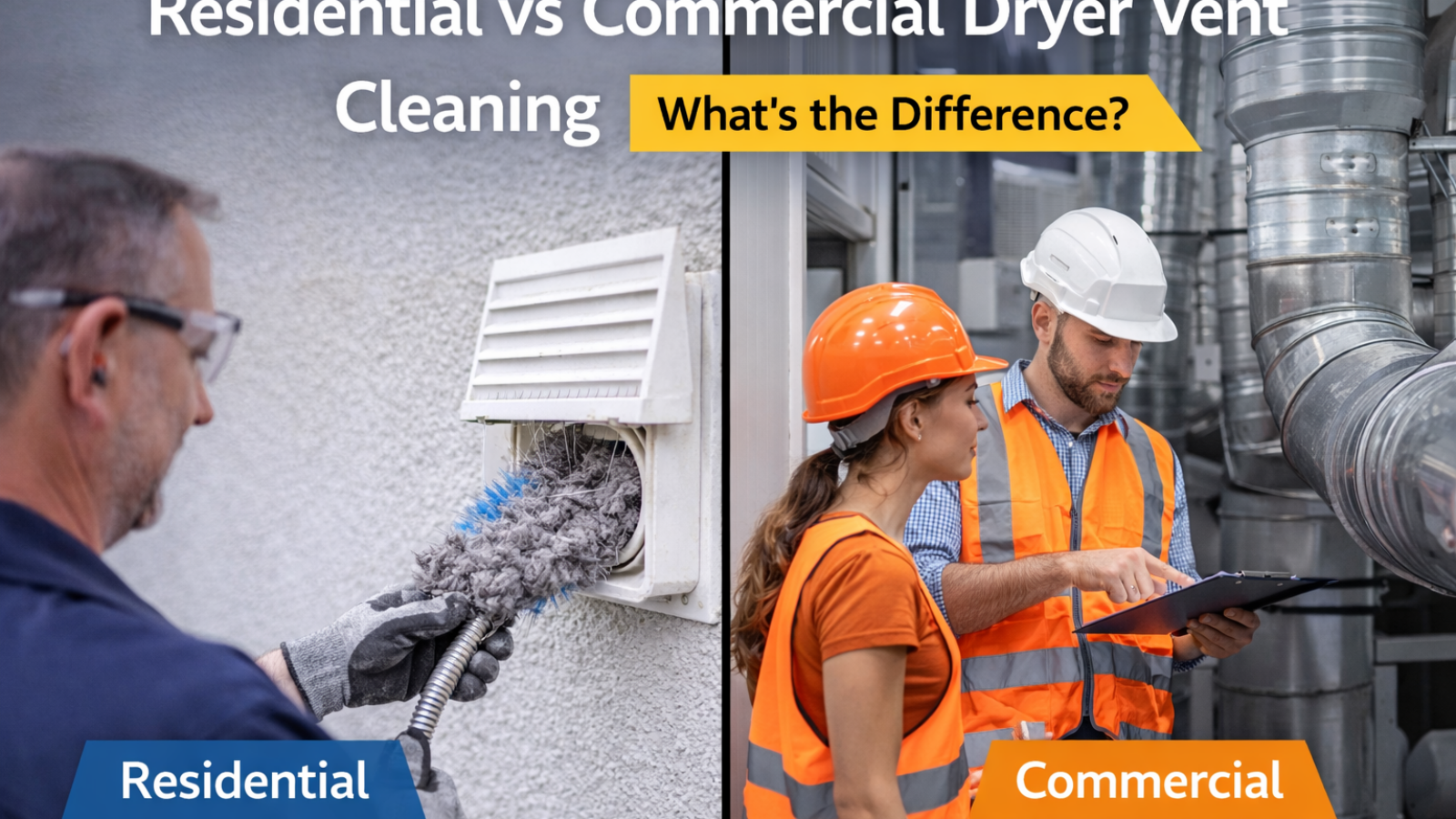
Residential vs commercial dryer vent cleaning isn’t just a matter of scale — it’s about different risks, different systems, and often different compliance needs. If you manage a home, strata building, or commercial property in Vancouver, knowing the difference helps you choose the right service schedule and reduce fire hazards caused by lint buildup.
In this guide, we’ll break down how each type of dryer vent system works, what cleaning involves, and the key differences that matter most for safety, performance, and maintenance planning.
What Is Residential Dryer Vent Cleaning?
Residential dryer vent cleaning focuses on single-family homes, townhomes, and small multi-unit setups where each dryer typically connects to a shorter vent run. The goal is to remove lint and debris from the entire vent path (interior and exterior) to improve airflow and reduce overheating risk.
- Typical properties: houses, townhouses, small condos
- Main issues: lint buildup, crushed/blocked ducts, bird screens, moisture
- Outcome: faster drying cycles, less strain on the dryer, lower fire risk
Common signs your home dryer vent needs cleaning
- Clothes take longer than usual to dry
- Dryer feels unusually hot
- Burning smell or excess heat in the laundry area
- Weak airflow from the exterior vent hood
- Lint accumulating around the dryer or vent connection
What Is Commercial Dryer Vent Cleaning?
Commercial dryer vent cleaning applies to shared laundry rooms, multi-unit residential buildings, hotels, care facilities, and commercial operations where vent systems can be longer, more complex, and used much more frequently.
- Typical properties: strata buildings, apartment blocks, hotels, laundromats, care homes
- Main issues: long duct runs, multiple connections, heavier usage, code/compliance requirements
- Outcome: reduced downtime, safer operations, better airflow, documented maintenance
Why commercial systems require a different approach
Commercial and multi-unit systems often include longer ducts, vertical runs, roof exhaust points, and shared vent paths. Higher usage means lint accumulates faster, increasing the chance of restrictions, overheating, and dryer-related fire hazards.
7 Key Differences Between Residential and Commercial Dryer Vent Cleaning
1) System size and complexity
Residential vents are usually shorter and easier to access. Commercial systems may have long runs, multiple elbows, roof terminations, and shared ducting.
2) Cleaning frequency requirements
Homes often benefit from annual or semi-annual service depending on usage. Commercial or shared laundry rooms usually require more frequent cleaning due to higher throughput.
3) Fire risk exposure
Both environments face lint-related fire risk, but commercial settings often have greater exposure due to higher load volume and continuous operation.
4) Equipment and access methods
Commercial jobs may require specialized tools, longer rotary systems, access planning, and coordination with building management for safe entry points.
5) Compliance and documentation
Commercial properties often need documented maintenance records for internal policy, insurance, or facility management requirements.
6) Downtime and scheduling
Residential work is usually quick to schedule. Commercial cleaning may require off-hours work or planned windows to minimize disruptions.
7) Who is responsible
In a home, responsibility is usually the homeowner. In strata or commercial sites, responsibility may be shared between property management, owners, and service providers.
Which Dryer Vent Cleaning Service Do You Need?
If you’re a homeowner, you likely need residential dryer vent cleaning. If your property has shared laundry rooms, multiple dryer connections, or long duct routes, you likely need a commercial dryer vent cleaning plan.
Quick rule: If multiple households use the same laundry system, or the duct route is long/vertical, treat it as commercial and schedule service accordingly.
Why Professional Dryer Vent Cleaning Matters
Professional cleaning helps restore airflow, reduces lint restrictions, and supports safer dryer operation. It also helps prevent performance issues like extended drying cycles and overheating that can shorten dryer lifespan.
Tip: Combine vent cleaning with a quick inspection of the exterior hood, lint screen condition, and duct integrity to catch early problems.
FAQ
Is commercial dryer vent cleaning required by law?
Requirements vary by property type and policies. Many commercial or multi-unit sites follow documented maintenance schedules to meet safety and operational standards.
How often should residential dryer vents be cleaned?
Most homes benefit from yearly cleaning, but larger households, pets, and frequent laundry loads may need service every 6–9 months.
Are commercial dryer vent systems more prone to fires?
They can be, mainly due to higher usage and longer duct routes. Regular cleaning and airflow checks significantly reduce risk.
Can the same company handle residential and commercial dryer vents?
Yes — as long as they have the proper tools and experience for long runs, roof terminations, and multi-unit systems.
Need help in Vancouver? If you’d like a quote or a maintenance plan for a home, strata building, or commercial facility, request a professional dryer vent inspection and cleaning schedule.