

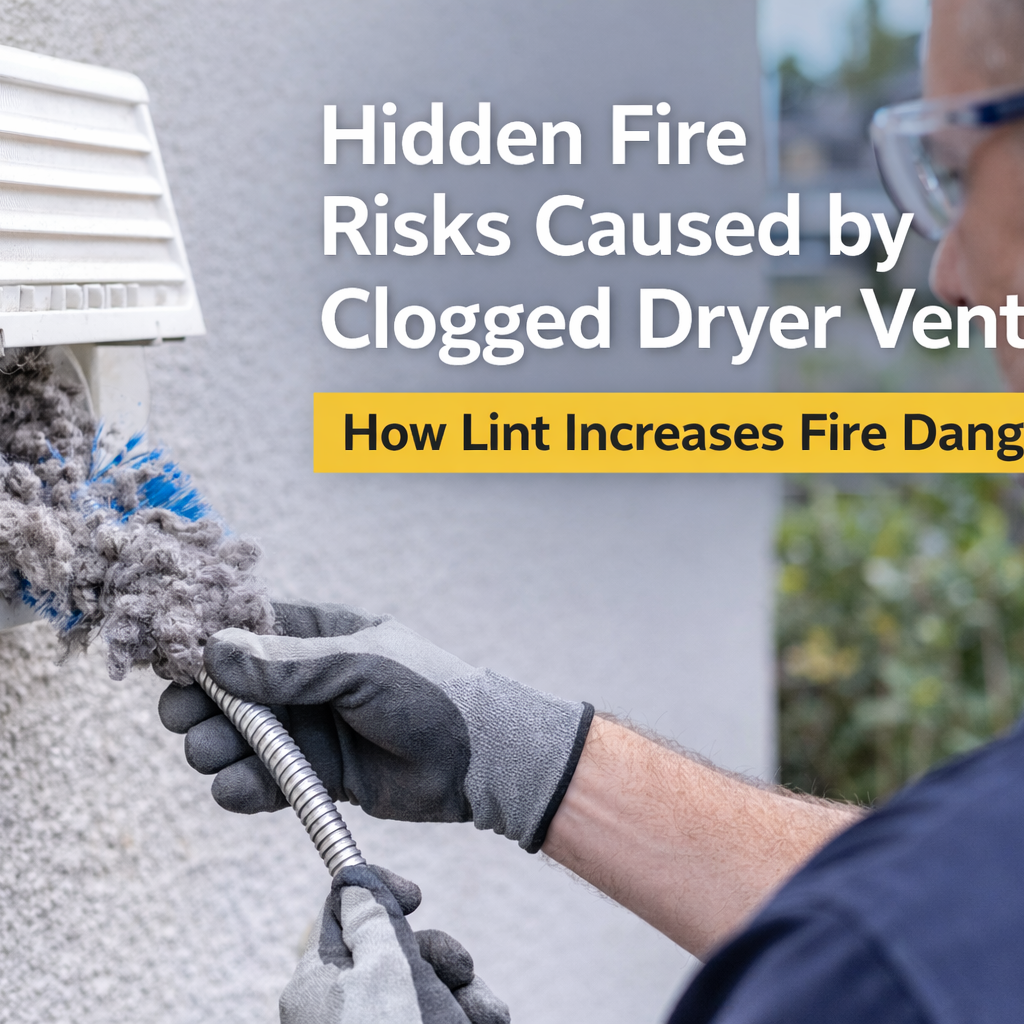
Clogged dryer vents fire risk is a serious safety issue for homeowners, strata councils, and property managers. When lint and debris build up inside the vent line, airflow gets restricted, heat rises, and a small issue can turn into a dangerous dryer-related fire.
How Clogged Dryer Vents Increase Fire Risk
Your dryer is designed to move hot, moist air outside. If the vent is partially blocked, that hot air can’t escape properly. Over time, lint becomes fuel, heat becomes the spark, and restricted airflow becomes the trigger.
Top Warning Signs of a Clogged Dryer Vent
- Clothes take longer than usual to dry
- Dryer feels hotter than normal on the outside
- Burning smell during or after a cycle
- Lint visible around the dryer or vent opening
- Bathroom/laundry room feels humid after drying
7 Hidden Dangers You Might Not Notice
- Heat buildup inside the vent line that slowly damages materials and increases ignition risk.
- Lint packed behind the dryer where it’s hard to see and easy to overlook.
- Blocked exterior vent hood from lint, bird nests, or debris.
- Kinked or crushed flexible duct restricting airflow and trapping heat.
- Moisture trapped in the line which can accelerate lint accumulation and create mold issues.
- Overworked dryer components (motor, heating element) increasing wear and overheating chances.
- False “it’s working fine” signal because the dryer still runs, even when airflow is unsafe.
Why Professional Dryer Vent Cleaning Matters
DIY lint cleaning helps, but it rarely clears the full vent run—especially in condos, strata buildings, or longer duct systems. A professional service removes compacted lint from the interior line and checks airflow performance for safer operation.
What a Proper Dryer Vent Service Should Include
- Interior line cleaning (from dryer connection through the full duct run)
- Exterior vent hood cleaning and inspection
- Airflow verification (before/after)
- Safety check for duct routing, materials, and restrictions
If you’re in Vancouver and want the vent line cleaned end-to-end, check our service page: professional dryer vent cleaning in Vancouver.
Fire Prevention Tips for Homes, Strata & Commercial Buildings
- Clean the lint trap after every load
- Use rigid or semi-rigid ducting (avoid cheap foil flex ducts)
- Make sure the exterior vent hood opens freely
- Schedule routine cleaning—especially for shared buildings and long runs
- Don’t ignore drying time changes (it’s often the first symptom)
For additional fire safety guidance, you can review resources from the National Fire Protection Association (NFPA).
Frequently Asked Questions
How often should dryer vents be cleaned?
Most homes should schedule cleaning every 12 months. Strata, high-usage households, or longer vent runs may need it every 6–9 months.
Can a clogged dryer vent really cause a fire?
Yes. Lint is highly flammable. When airflow is restricted, heat builds up and can ignite lint inside the vent line or around the dryer connection.
What’s the fastest way to tell if my vent is clogged?
Longer drying times, excessive heat, and a burning smell are the most common warning signs. If you notice any of these, stop using the dryer and inspect the venting.
Is dryer vent cleaning worth it?
Yes—clean vents improve safety, reduce drying time, and can help lower energy use by restoring proper airflow.
Final Thoughts
Clogged dryer vents are often invisible until something goes wrong. If you manage a home, strata building, or commercial property, routine dryer vent maintenance is one of the simplest ways to reduce fire risk and keep equipment running efficiently.
Need help in Vancouver? Book a professional inspection and cleaning so your vent system stays clear, safe, and compliant.